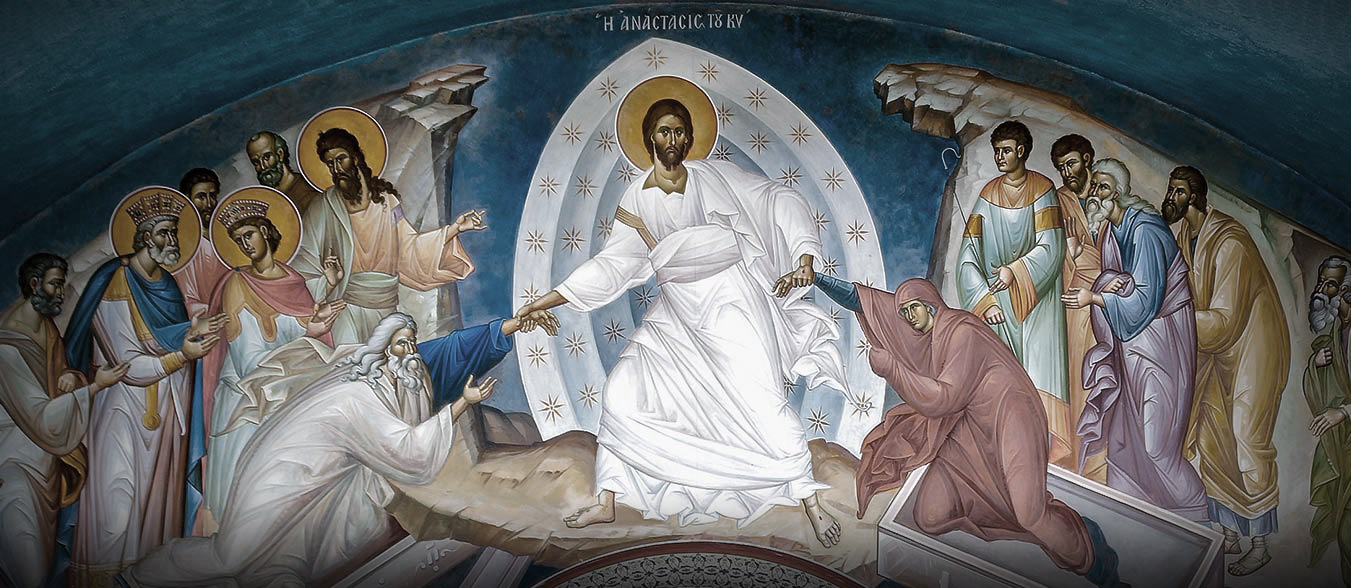
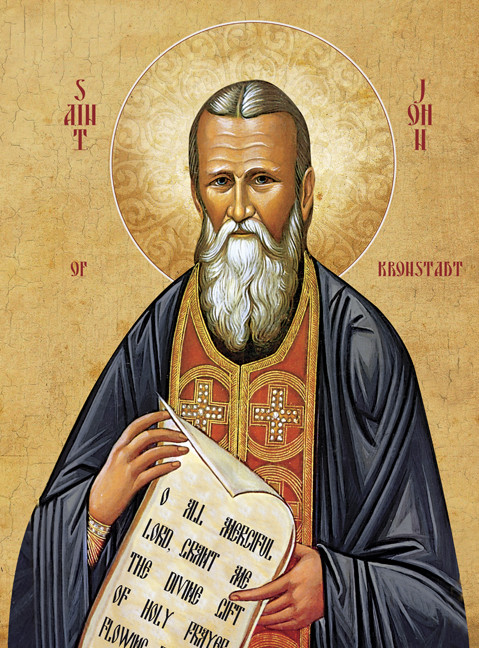
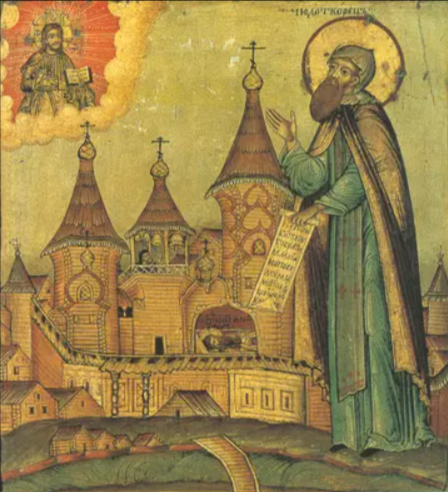
If you've never been in an Orthodox church before, the icons can feel intense.
The walls are full of faces — saints, the Theotokos, Christ — and people light
candles in front of them, kiss them, bow before them. To someone unfamiliar,
this can look like idol worship. It isn't.
Think of an icon less as a religious painting and more as a kind of sacred
photograph. When you keep a picture of someone you love on your desk, you don't
worship the photograph. You honor the person it shows. You might touch it, or
talk to it, or carry it with you when you travel. The photograph isn't the
person — but it brings them close to you. An icon does the same thing for the
saints and for Christ Himself.
Orthodox Christians venerate icons. We do not worship them. Worship belongs to
God alone. Veneration is something different — closer to the honor a child
gives a parent, or the respect we show at the grave of someone we love. We
honor what the icon depicts, not the wood and paint.
This distinction matters because icons aren't decorative in Orthodox life. They
are how we remember that the saints are not gone — they are alive in Christ,
and they pray for us. They are how we hold the mystery of the Incarnation in
front of our eyes: God became visible in Christ, and so He can be depicted. To
deny that He can be drawn is to forget that He took on flesh.
If you visit our parish and find yourself uncertain about what to do with the
icons, that's perfectly fine. Watch, listen, and ask questions. Father Antonios
welcomes them. There is no test, no expectation that you understand it all at
once. The icons have been waiting a long time. They will wait for you, too.